
Six years ago, Trustees of Friends Provident Foundation asked why their decisions about investing the foundation’s endowment were made behind closed doors.
That simple question led to an open tender process to find an investment service provider (ISP) for a joint mandate of £30 million from Friends Provident Foundation, The Blagrave Trust, and Joffe Trust. The mandate focused on environmental, social, and governance (ESG) issues and the winner was the Cazenove Sustainable Growth Fund. The fund is now worth over £906 million in assets under management.
Fast forward to the autumn of 2024 and Friends Provident Foundation and The Blagrave Trust came back together with four other foundation partners to begin a new open tender process: this time with a challenge to the investment industry to create a fund that prioritises positive social and environmental impact for future generations.
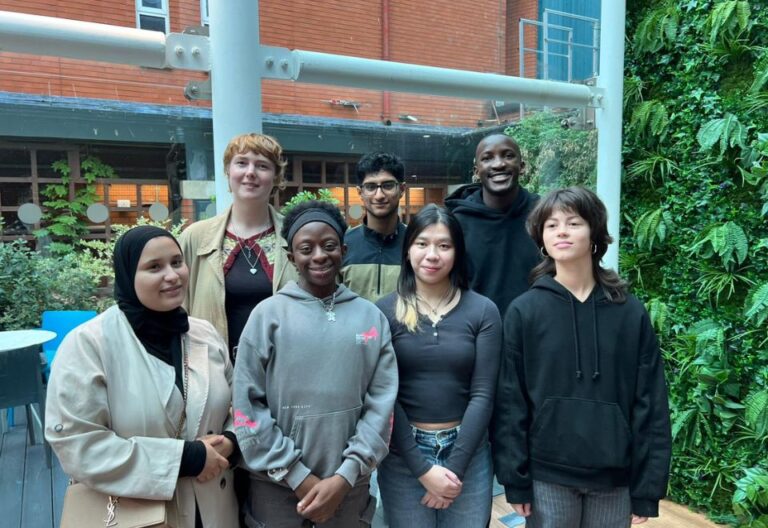
The investing partners (The Blagrave Trust, The Children’s Society, Cripplegate Foundation, Friends Provident Foundation, the Joseph Rowntree Foundation, and the Vivensa Foundation) are working with a panel of seven young people to find an investment service provider for a mandate of up to £50 million. The process is supported by ShareAction’s Charity Responsible Investment Network, the Impact Investing Institute, John Ellerman Foundation, Gallagher, and The Robertson Trust.
Data digested
By the closing date of 19 December 2025, the partners had received 60 applications – one more than in 2020. The key numbers are:
- 60 applications received
- 55 different ISPs applied
- Applicants were based in seven countries and three continents
- Applicants report over £11 trillion total in assets under management
Following an intense assessment process, which included 13 assessors from seven partner and supporting organisations, and three sets of scores for each assessed application, a shortlist of five ISPs has been invited to present at London’s Barbican on 25 March 2026.
What made us optimistic about the applications received? And what do we think is still missing? Here are some immediate reflections from some of the partners and supporting organisations. A full state of the sector report will be published later this year.
Reasons to be cheerful
There's merit in what we’re doing
Despite ESG backlash and difficult times for sustainable investment strategies, the response we received was positive in terms of the number of applications, size of applicants, and size of the reported assets under management, which are around £11 trillion. The applications demonstrated that it’s possible to move our money to investments that are more aligned with our values. We know that the status quo is deeply unsatisfactory and it’s good to see that a desire to invest with impact still has influence.
A consensus on how to measure impact is building
We were generally impressed with the consistency of the approach towards impact reporting in the applications. As well as measuring and assessing impact using the UN Sustainable Development Goals (SDGs), we regularly saw use of the Impact Management Project’s five dimensions of impact.
Consistent use across the sector of an established and openly available framework like this is a positive sign. Impact can be difficult to measure, seeming intangible and distant. Increasing use of an open-source framework rather than proprietary software helps make this often-hidden world more open.
The ecosystem is changing
We saw a breadth of investment service providers making applications: big, traditional investment houses offering a sustainability arm; boutique impact investing firms; and larger, wholly sustainability focused firms. This evolving ecosystem is good news, reflecting a growing industry and offering multiple options to investors.
Mind the gap
Trade-offs still exist
The best financially performing funds are still investing in the biggest companies in the world: the “Magnificent Seven”. In the last five years the funds creating a positive real-world impact have generated less of a financial return and it’s disheartening to see that long-term impact is still not considered in the value of a company.
Some asset classes remain a challenge
Private market applications were often a challenge as we need liquidity to ensure we’re still able to meet our mission through funds for grant giving and operations. The impact of the private assets was high, but the trade-off was the liquidity. We also found portfolios investing in natural capital a challenge due to the uncertain commercial ability of options such as carbon and biodiversity credits.
Engagement often still inadequate
Despite some great examples of engagement activity, overall we found it to be quite insufficient. We know that strong, positive engagement with investees makes a difference and hope that more investment service providers will develop their approaches.
The Endowments Investing Challenge event at London’s Barbican on 25 March 2026 will bring our shortlist together in front of an audience of Future Generational Panel members, experts, Trustees, investment committee members, staff and stakeholders. The audience will challenge the ISPs with questions, seeking clarity and transparency to enable a fair and balanced decision to be made about how to invest up to £50 million for positive long-term impact on future generations.